
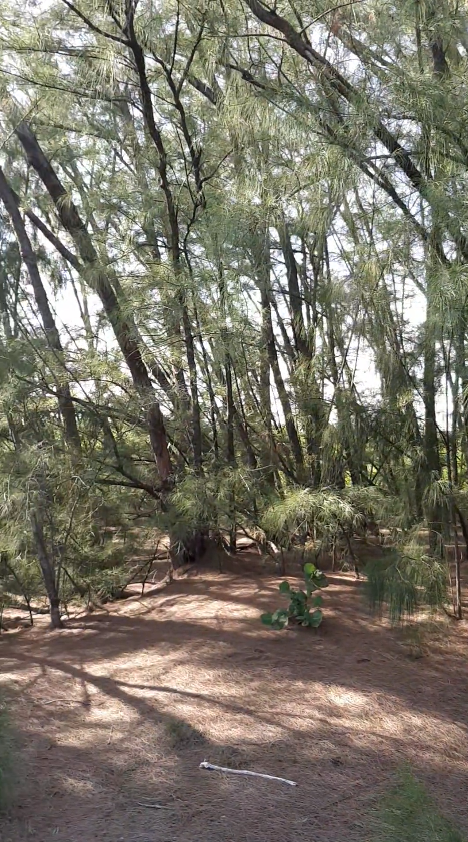
The South Florida Fall: Learning to Notice a Season That Doesn’t Look Like One
If you grew up somewhere with four obvious seasons, autumn comes with instructions.
Leaves change.
Temperatures drop.
Sweaters and boots appear.
Someone inevitably puts cinnamon in something that did not previously require cinnamon.
Fall arrives loudly.
South Florida has a different relationship with fall.
The palms aren’t changing colors on command. The landscape doesn’t suddenly become a postcard of orange and red. There isn’t a crisp morning every day that begs for a sweater, a warm drink, and an unnecessarily long walk just because the weather finally allows it.
And yet, autumn still arrives.
You just have to pay attention differently.
Because perhaps one of the unexpected gifts of living somewhere without an obvious seasonal script is learning that change doesn’t always announce itself.
Maybe Autumn Isn’t Missing. Maybe We’re Looking for the Wrong Signs.
The first day of astronomical autumn arrives in South Florida on September 22.
But if you walk outside expecting the world to suddenly look different, you might miss it.
That’s because seasons aren’t experienced the same way everywhere.
A northern autumn might speak through red maple leaves, chilly mornings, and woodsmoke.
A desert autumn might speak through changing temperatures and longer shadows.
A mountain autumn might arrive through golden forests and the first hint of snow.
And a South Florida autumn?
Maybe it speaks through light.
Through cooler mornings.
Through evenings that begin to feel a little easier.
Through changing bird activity, breezes, tides, and the rhythm of outdoor life.
Through that subtle feeling that you can stay outside a little longer without immediately searching for air conditioning.
After months of heat, that feeling is very real.
Nature has different languages.
Travel teaches us that.
A desert sunset isn’t a forest sunset.
A mountain trail isn’t a mangrove trail.
A northern autumn isn’t a South Florida autumn.
Different doesn’t mean less beautiful. It means you’re being asked to notice something else.
Maybe We Have the Same Problem With Life
I wonder if we sometimes make the same mistake with our lives.
We expect important seasons to come with obvious signs.
A new job.
A major move.
A relationship.
A big trip.
A promotion.
A major financial milestone.
A dramatic transformation.
A before-and-after photograph.
We like change to be visible.
We like to know when something has officially begun.
But most meaningful change doesn’t happen that way.
Sometimes change looks like becoming less available for things that drain you.
Sometimes it looks like finally taking your lunch break.
Sometimes it looks like spending your money more intentionally.
Sometimes it looks like realizing another destination isn’t what you need right now—you need rest.
Sometimes it looks like choosing a local trail over another night scrolling on your phone.
Sometimes it looks like becoming curious again.
You start saying no without feeling guilty.
You start saying yes to experiences that actually align with the life you’re trying to build.
You find yourself outside more often.
You stop rushing through places.
You notice what you used to overlook.
Nothing dramatic happened.
And yet…
something changed.
That’s the thing about seasons.
They don’t ask permission before they begin.
South Florida Doesn’t Need to Become Somewhere Else
There can be a strange pressure to compare where we are with somewhere else.
We see fall foliage online and think:
I wish we had that.
We see mountain towns and think:
I wish I lived there.
We see European villages and think:
Maybe that’s where life feels slower.
And sometimes, traveling somewhere different is exactly what we need.
That’s part of the wonder of travel.
But there’s another question worth asking:
What if I became better at noticing where I already am?
South Florida has its own natural vocabulary.
Mangroves.
Palms.
Water.
Heat.
Humidity.
Coastal light.
Wetlands.
Wildlife.
Storms.
Sunsets.
Tides.
Long stretches of outdoor living.
Our landscape may not give us the classic visual cues of autumn.
But it gives us other invitations:
Pay attention.
Get outside.
Look closer.
Stay curious.
Stay a little longer.
The Outdoors Teaches Us How to Notice
One of the greatest benefits of spending time outdoors is that it trains our attention.
You notice tracks.
Clouds.
Bird calls.
Tides.
Plants.
Wind.
Light.
Tiny changes.
You begin to realize that the world has been giving you information all along. You just had to slow down enough to receive it.
And that attention can follow you home.
Your neighborhood becomes interesting.
Your commute becomes an observation.
A familiar trail reveals something new.
A place you’ve visited ten times suddenly feels different because you finally stopped rushing through it.
Maybe that’s one reason time in nature can feel restorative.
For a little while, your attention isn’t being pulled in a dozen directions.
You aren’t thinking about the next email.
The next notification.
The next meeting.
The next bill.
The next destination.
You’re noticing what is actually in front of you.
A breeze.
A bird.
A wave.
A cloud.
A tree moving in the wind.
The changing light.
And sometimes, in that space, you notice yourself, too.
Maybe the Real Luxury Is Having Somewhere to Breathe
We’re often encouraged to think of wellness as something we have to purchase.
A retreat.
A resort.
A treatment.
A weekend away.
A plane ticket.
A new class.
And those experiences can absolutely be meaningful.
But wellness doesn’t always require leaving your life behind.
Sometimes it looks like leaving your desk.
Sometimes it looks like taking the longer route home.
Sometimes it looks like walking by the water after work.
Sometimes it looks like sitting in a park without turning the moment into content.
Sometimes it looks like spending Saturday morning exploring somewhere nearby.
Sometimes it looks like choosing a local café, restaurant, trail, market, guide, or small business and allowing yourself to experience your own community like a traveler.
You don’t always need more money.
Sometimes you need more attention.
And maybe that’s where travel and wellness meet.
Travel teaches us to explore.
Wellness teaches us to be present enough to experience what we find.
Go Deeper, Not Always Farther
Supporting local businesses can be part of that mindset, too.
When we travel locally, we’re not simply consuming a destination.
We’re participating in it.
The independent restaurant.
The neighborhood coffee shop.
The local artist.
The outdoor guide.
The small wellness studio.
The family-owned shop.
The farmers market.
The person who has built a business around sharing something they love about their community.
Travel doesn’t always have to mean going farther.
Sometimes it means going deeper.
And sometimes the adventure isn’t discovering somewhere you’ve never been.
It’s finally paying attention to somewhere you’ve passed a hundred times.
Maybe We Should Stop Expecting Every Season to Look the Same
There is something freeing about realizing that you don’t have to experience a season according to someone else’s definition.
You don’t need sweater weather.
You don’t need changing leaves.
You don’t need the perfect pumpkin aesthetic.
You don’t even need to feel dramatically different because the calendar says you’re supposed to.
You can simply notice.
What is changing around you?
What is changing within you?
What feels lighter?
What feels heavier?
What are you ready to release?
What are you curious about?
Where are you spending your energy?
Where are you spending your money?
What deserves more of your attention?
What deserves less?
These questions feel particularly appropriate in a season associated with transition.
Because autumn isn’t only about things falling away.
It’s also about noticing what remains.
And perhaps that’s something we can borrow from nature:
Not everything has to change at once.
Become a Better Observer
One of the most underrated forms of adventure is returning somewhere familiar with fresh eyes.
Choose an outdoor place you’ve visited before.
It doesn’t have to be somewhere spectacular.
A trail.
A beach.
A park.
A waterfront.
Your neighborhood.
Your backyard.
Even the route you take to work.
Go without an agenda.
If you can, leave the headphones at home.
Put your phone away for a while.
Walk slowly.
Then notice five things.
Not five beautiful things.
Five different things.
A bird you don’t remember seeing.
A plant growing somewhere unexpected.
A change in the water.
A different quality of light.
A sound you usually overlook.
A familiar place can become unfamiliar when you change the way you look at it.
And maybe that’s the bigger lesson.
Sometimes the place changes.
Sometimes the season changes.
Sometimes our circumstances change.
And sometimes…
we change.
You Don’t Need Four Seasons to Live Seasonally
Seasonal living isn’t necessarily about following a perfect calendar.
It’s about awareness.
It’s asking:
What is this season inviting me to do more of?
What is it asking me to do less of?
Maybe it’s asking you to slow down.
Maybe it’s asking you to explore.
Maybe it’s asking you to spend more time outside.
Maybe it’s asking you to reconnect with your neighborhood.
Maybe it’s asking you to spend your money according to your values.
Maybe it’s asking you to stop waiting for the “right” conditions to enjoy your life.
Maybe it’s asking you to recognize a transition that has already begun.
South Florida may not give us a dramatic autumn.
But perhaps that’s exactly why I appreciate it.
It teaches a lesson that applies far beyond the weather:
Beauty doesn’t always announce itself.
Sometimes you have to slow down enough to notice it.
Sometimes the season you’re waiting for isn’t the one that’s coming.
It’s the one that’s already here.
This Week’s Seasonal Observation Challenge
Choose one outdoor place you’ve visited before.
Return to it.
Spend at least 20 minutes there without trying to accomplish anything.
No productivity goal.
No perfect photo.
No checklist.
Just attention.
Notice five things that have changed since your last visit.
Then ask yourself one more question:
What has changed in me since I was last here?
You may discover that the place changed.
You may discover that the season changed.
Or you may discover that the biggest change was simply learning how to look.
And maybe that’s balance.
Not doing everything.
Not going everywhere.
Not constantly chasing the next thing.
Just being present enough to notice the beautiful things happening in the season you’re already living.
Leave a Reply